VISION
I knew I couldn’t build a biplane…
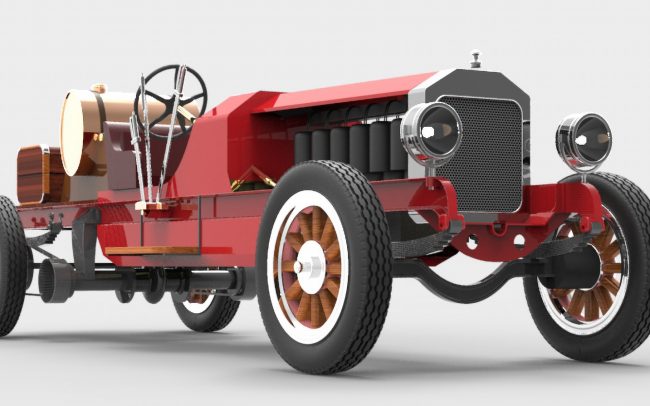
So I thought — what about a speedster?
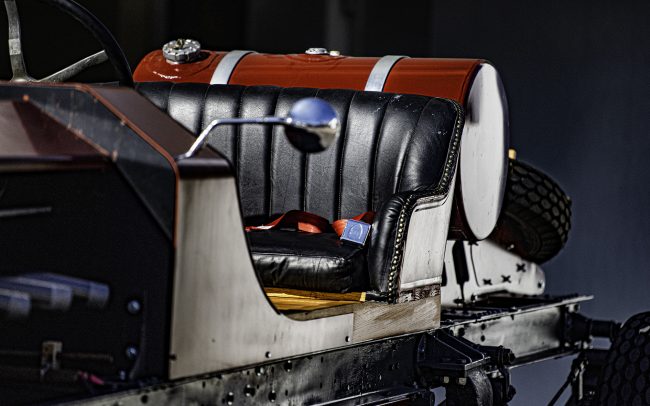
A race car from the 1920s, reviving the spirit and the technical brilliance of the brass-era machines.
The idea was simple — and impossible at the same time.
Find the right rig… with a proper, big-sized engine.
Something with at least fourteen thousand cubic centimeters of displacement.
That would be the heart — the core — of the project.
It would take time.
And it would take me across continents —
through endless junkyards, forgotten barns, and remote workshops,
on long journeys across the United States and Europe,
to gather every single component I would need.
HISTORY
Great stories about fearless biplane pilots and daring drivers of horseless carriages have captured my imagination since childhood.
The idea of creating something different — something outrageously mesmerizing, mind-blowing,
and alive with untamed elements —
never left me.
The taste of oil and gasoline…
the roar of engines and the smell of metal — these could not remain just a dream.
They had to become real…
someday.
PROJECT
Studying state-of-the-art motorcars of the early century, I realized that choosing a fire engine — an American LaFrance or a Seagrave —
would be the foundation for bringing the Speedster project to life.
These fire trucks were beasts of engineering — high-torque giants with massive engines
and three-speed chain drives where speed could still be pushed further.
After four years of intense research
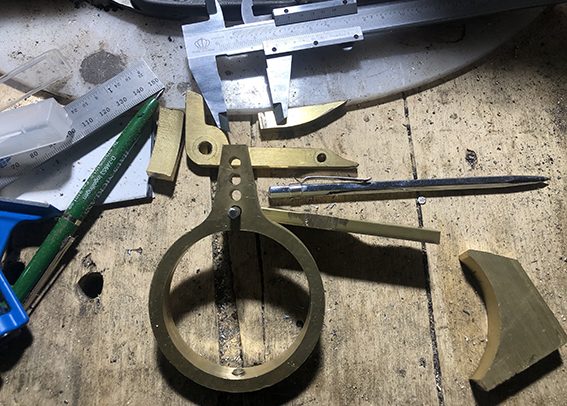
and countless hours spent at auctions, the main components were finally gathered — ready to be cleaned, restored, and reborn in my garage.
It became more than just a project.
It was a journey that changed my point of view.
ACHIEVEMENTS
More than three thousand hours were invested in the reconstruction of this motorcar.
Along the way, new friendships were forged, countless lessons were learned,
and there were moments of pure laughter — the kind that only comes when passion meets perseverance.
All of it together shaped Unicorn Invictus — not just as a machine,
but as an extraordinary experience.
THE SPEEDSTER
About
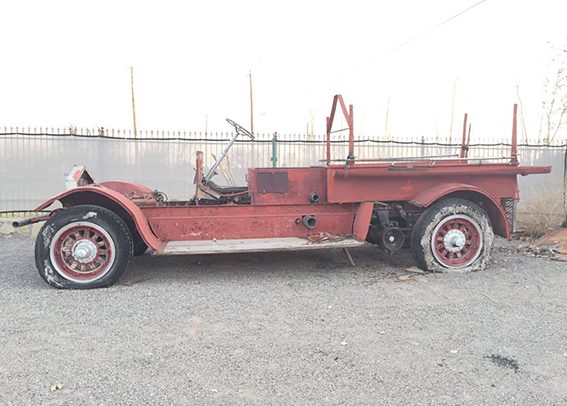
Unicorn Invictus was originally a fire pumper truck.
Built in 1919, this Seagrave fire pumper once served proudly across the United States,
until it was finally dismissed — left behind in the desert, no longer needed.
For decades, it must have rested there… forgotten in the outback.
Yet nature had been kind.
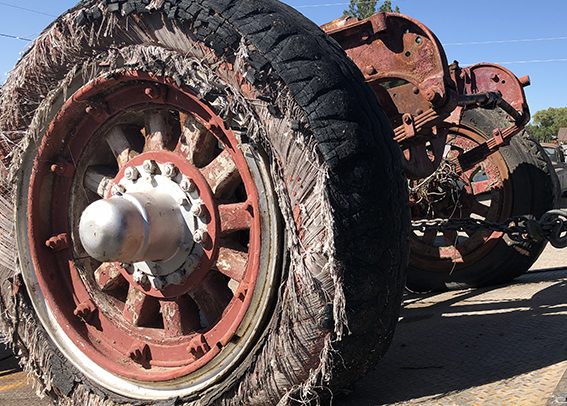
Despite the completely rusted steel felloes, the wooden-spoked wheels, the chassis, and the transmission
were not too badly beaten — protected beneath a quarter-inch coat of petrified grease, hard as stone,
and painfully difficult to remove.
Brass Era Fire Trucks. A Class Apart
Creative minds and brilliant engineers of the 1910s
developed a mesmerizing technology —
one that would become state of the art for its time.
A true masterpiece of craftsmanship,
built with superb precision using the limited tools of the era.
The F6 T-Head engine — a giant worth admiring.
Drawing inspiration from proven steam technology,
these designers carried that knowledge into an entirely new realm —
a powerplant fueled by gasoline.
Something so revolutionary,
no one could have imagined the impact it would have.
The old hit-and-miss fuel supply
was replaced by an extraordinary innovation —
a carburetor with a venturi system,
allowing the engine’s revolutions to vary simply by pressing a pedal.
The massive 800-gallon-per-minute water pump
was still governed mechanically —
a reminder of its origins in fire service precision.
Only fire trucks could afford such marvels of engineering.
They were the prestige machines of their time,
and for their builders, money was no obstacle
when it came to perfection.
The developement of a 1919 speedster racer out of scrap turned out to be a lifetime project I am grateful to have accepted
From the Journal
In March 1907, the Parisian newspaper Le Matin offered the world a challenge – “Will anyone agree to go this summer from Peking to Paris by motor car?”
Prior to this event, the car was still considered a novelty, an expensive toy for the wealthy elite – hardly a dependable form of transport.
The 16,000km challenge was ultimately taken up by drivers of four different makes of automobile. – two French DeDion Boutons, a Dutch Spyker, an Itala from Turin and a French three-wheeled Contal cycle-car.
As for the race, there were to be no rules, no maps and for that matter, no roads for much of the route.
„What needs to be proved today is that as long as a man has a car, he can do anything and go anywhere. Is there anyone who will undertake to travel this summer from Peking to Paris by automobile?„
Peking Paris race 1907